
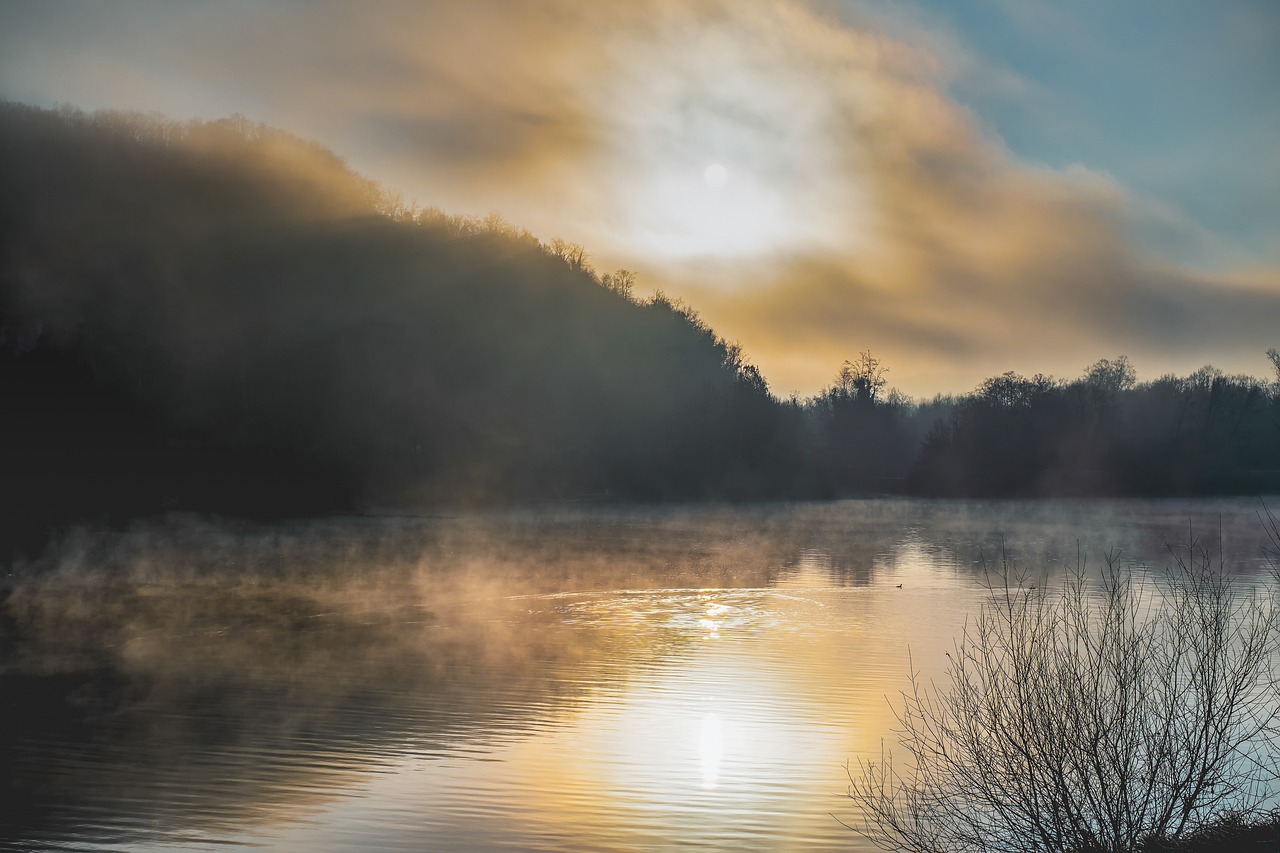
It was my birthday in February, so what better way to celebrate than with a birthday trip to Bath? This beautiful Regency city is one of my favourite places.
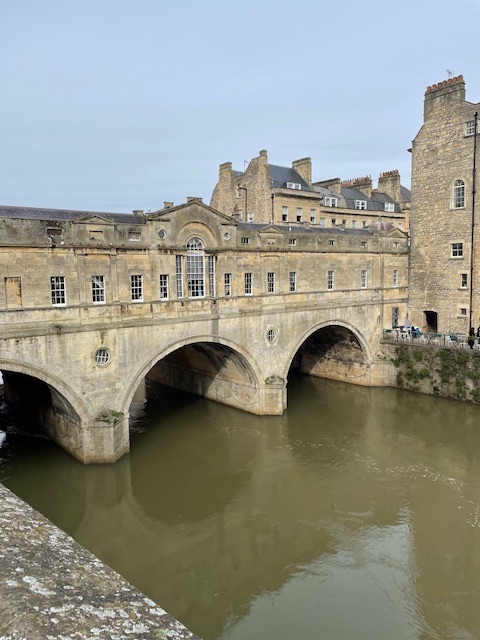
Husband and I arrived mid-morning to make the most of our short stay of two nights. After leaving the car at our hotel, we strolled into town and enjoyed brunch at Café Luca in Bartlett Street.
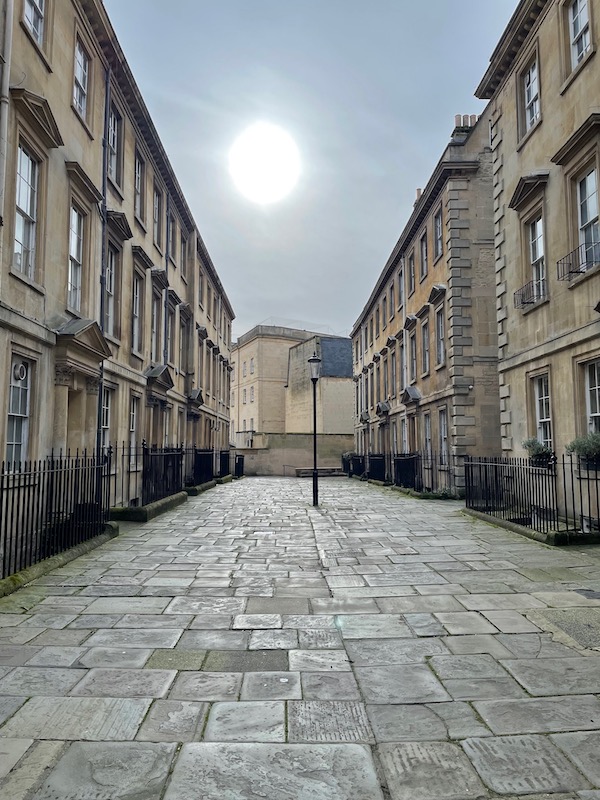
It was February, so we didn’t expect the weather to be great, but happily it was dry and the sun did make a brief appearance. The streets were also less crowded, meaning that I was able to get shots of the architecture rather than the tourists.
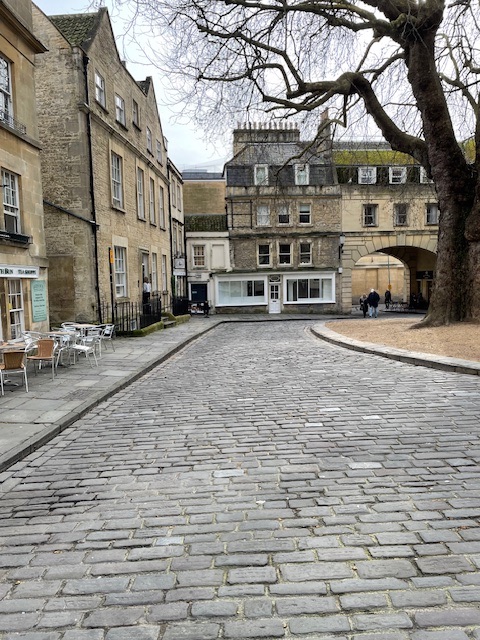
Weatherwise, the second day wasn’t the best with rain and dull grey skies, but we weren’t put off from our plan of walking round Bath’s Crescents. We started at Royal Crescent with its fabulous views towards Royal Victoria Park. Consisting of thirty Grade 1 listed houses, it was designed by John Wood the Younger and built between 1767-1775.
From there we dodged the raindrops down to Norfolk Crescent, a part of Bath that we’d not been to before. It was built between 1793-1822, and was originally designed by John Palmer, with some later alterations by John Pinch the Elder.
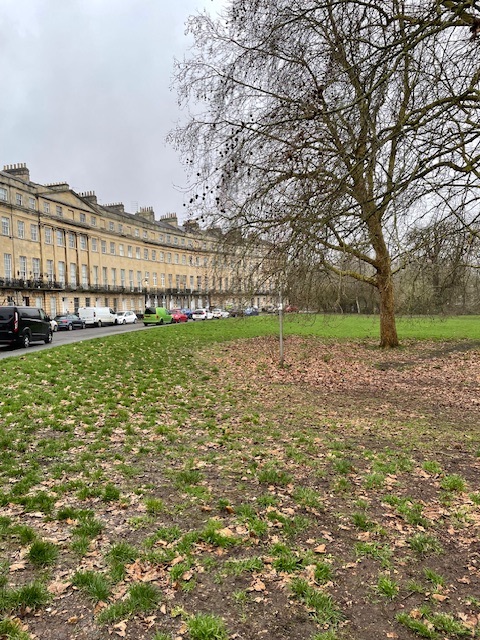
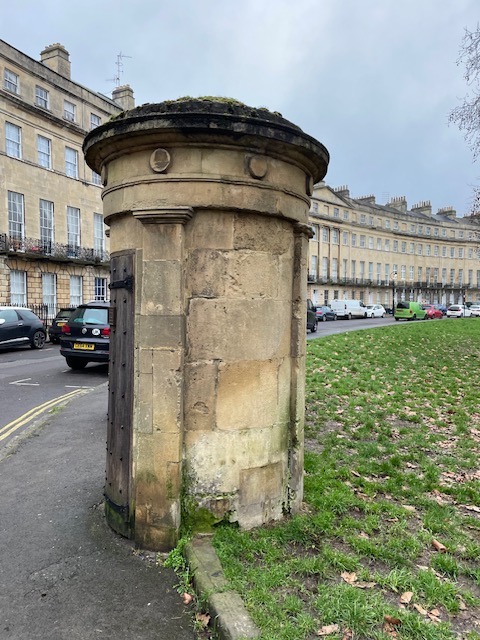
Across from the crescent is a large open, green space which was originally the formal garden for residents; here I was excited to find a watchman’s sentry box dating from 1810.
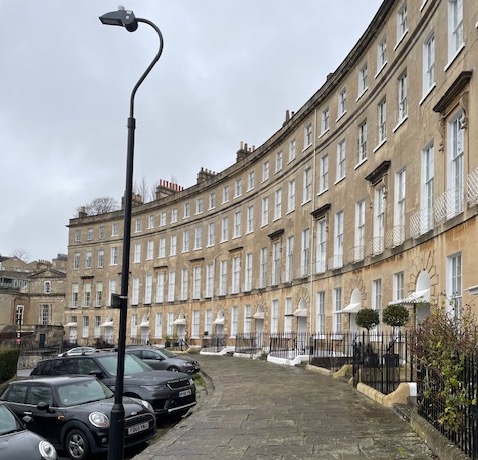
Next, it was back uphill to Cavendish Crescent; built in 1830 to a design by John Pinch the Elder, its eleven houses make it the smallest of Bath’s crescents.
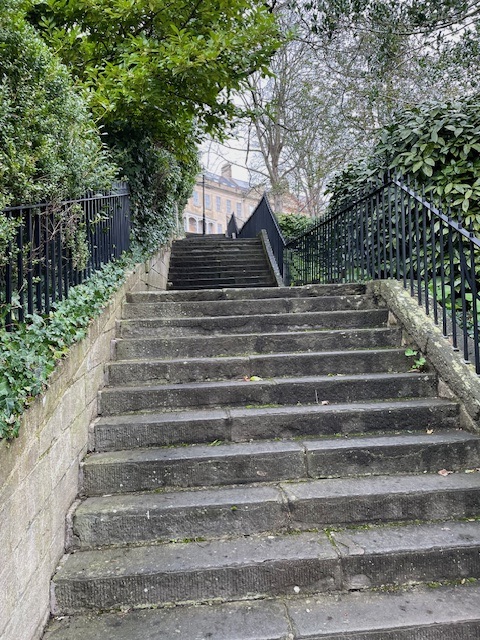
From there, we made our way up steep steps to Somerset Place.
Grade 1 listed, it was designed by John Eveleigh. Building began in 1790 but wasn’t completed until the 1820s.
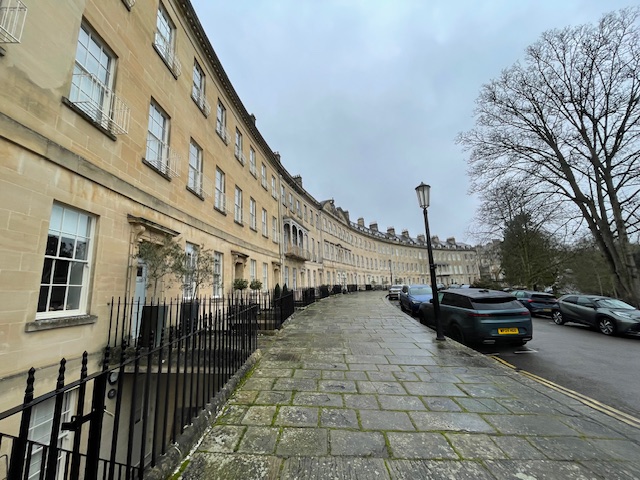
At one time it was owned by Bath Spa University, but because the buildings were unsuitable for teaching purposes and expensive for the university to maintain, the entire crescent was eventually put up for sale.
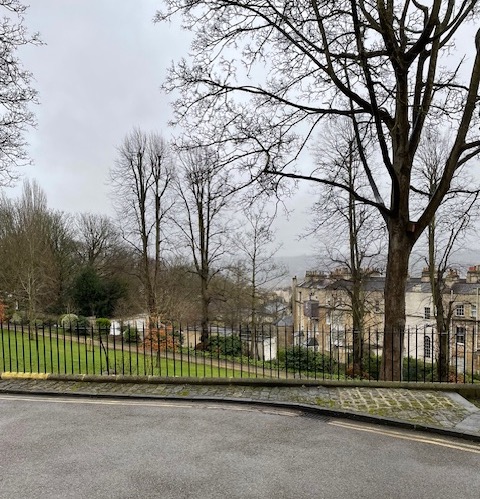
After admiring the amazing views across the city from Somerset Place’s vantage point it took us just over six minutes to reach Grade 1 listed Lansdowne Crescent.
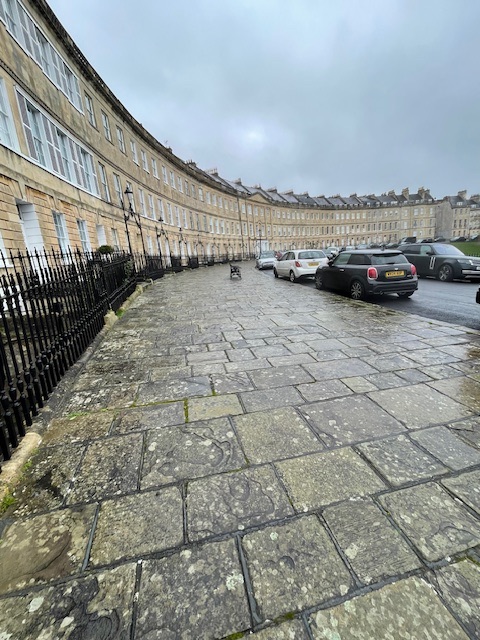
Designed by John Palmer, it was constructed between 1789-1793 by a variety of builders. Palmer ensured that the frontages of each of the twenty houses matched, but behind the facade the houses are not uniform.
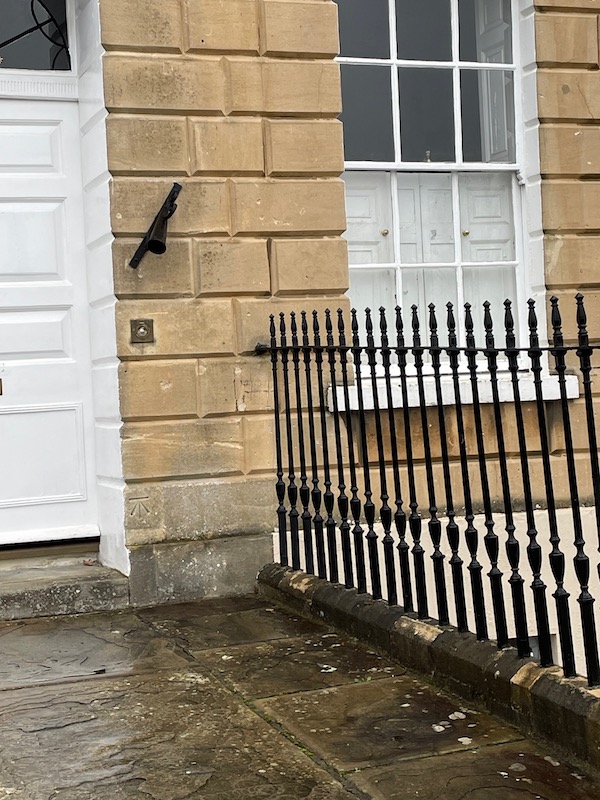
It too, has stunning views across the city and some nice Regency architectural features like this link extinguisher to the right of this front door. These were used to put out the torch or link carried by the link boy to illuminate the way home (no street lighting here in the early 1800s).
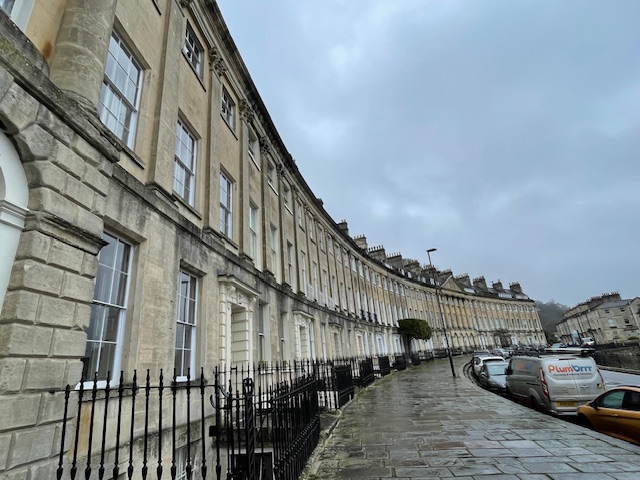
Our final destination was downhill to Camden Crescent. It was originally known as Upper Camden Place, and was built by John Eveleigh in 1788. It is a mixture of Grade 1 and Grade 2 listed houses.
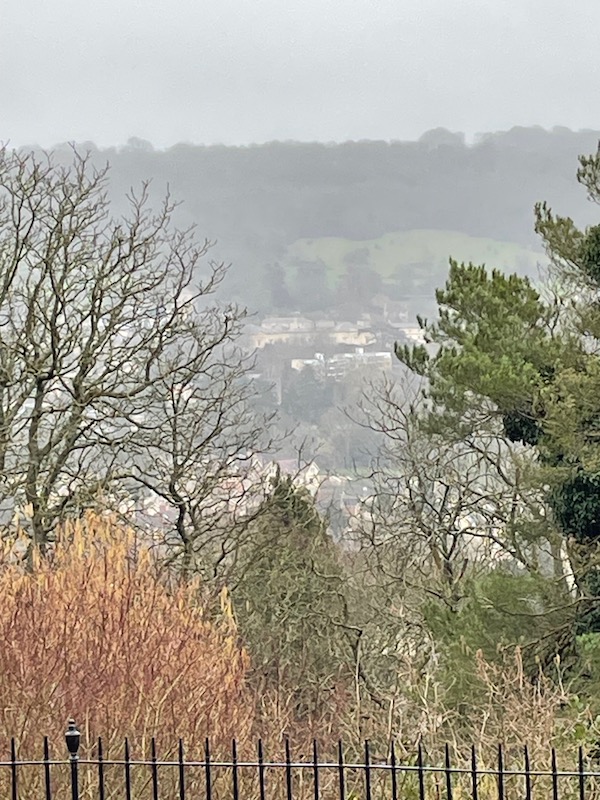
If you are a fan of Jane Austen, you might know that in Persuasion, the Elliott family rented lodgings here. Camden Crescent also features in my short story, A Christmas Wish, published in the Regency romance anthology, A Winter’s Romance.
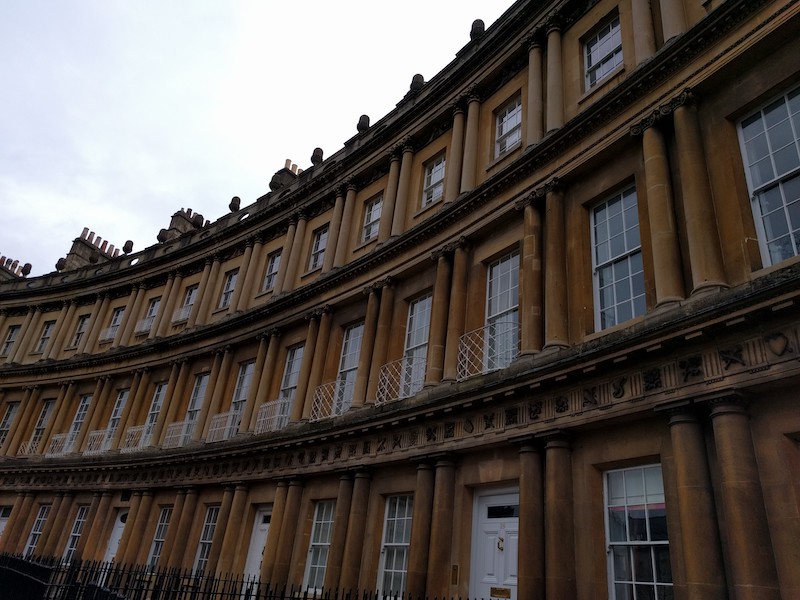
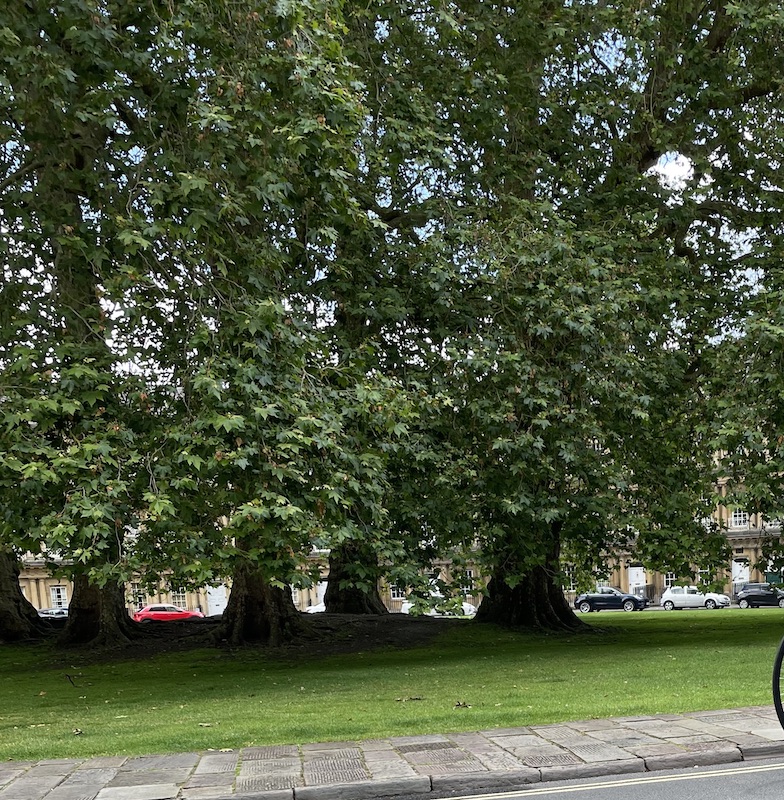
We didn’t include The Circus in our tour because we’ve walked through there many times. Said to be based on Stonehenge, The Circus was designed by John Wood the Elder and built between 1754-1768. It is formed of townhouses in three segments all of equal length. There is a lawn in the centre with five very large plane trees.
Sadly, we didn’t manage to reach Widcombe Crescent, so I’ve put that on my list of places to see on my next visit.
I’ll tell you about our third and final day in Bath in my next post.